
Enhancing Internal Communication in SMEs: The Rose, Thorn, Bud Framework for 2026 and Beyond
Reflecting on 2025 we’ve become increasingly aware of the importance of internal business communication that’s informative, regular and timely. In a year marked by hybrid work evolution, AI integration, rising concerns around information overload (with 43% of communicators prioritising concise messaging), and a push for channel optimisation, many SME leaders have recognised that effective internal dialogue isn’t just nice-to-have—it’s essential for alignment, engagement, and sustainable growth.[1] At Blueringed, we’ve worked with numerous growing businesses navigating these shifts, and one simple yet powerful tool has emerged as a favourite: the Rose, Thorn, Bud (also known as Rose, Bud, Thorn) framework.
This straightforward retrospective method, rooted in design thinking and agile practices,[2] provides a quick, balanced snapshot of team sentiment, activities, and priorities, fostering the kind of open, timely communication that drives better decisions.
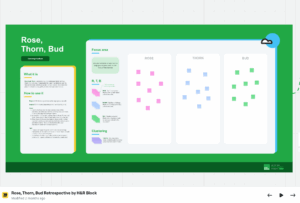
Why Rose, Thorn, Bud Fits Perfectly into 2025’s Internal Communication Trends
As internal comms trends for 2025 highlight priorities like reducing information overload, empowering managers for frontline communication, multichannel optimisation, and measurement-driven strategies,[3] tools like this framework align directly:
– Promotes Regular, Timely Feedback: Run it weekly or monthly to keep communication flowing without overwhelming teams.
– Cuts Through Noise: Focused categories ensure input is structured and actionable.
– Builds Trust and Alignment: Encouraging honest thorns alongside roses creates psychological safety and transparent leadership.
– Scales for SMEs: Low-cost, high-impact—ideal for businesses preparing for growth or transitions.
In our experience helping SMEs optimise operations and prepare for strategic moves, adopting Rose, Thorn, Bud has led to quicker identification of resource misallocations and emerging opportunities.
Implementing the Framework: An Easy Step-by-Step Approach
Make it simple to adopt across your business:
1. Introduce and Set Cadence: Share the concept in a team meeting. Opt for monthly submissions for a broader view or quarterly deep dives.
2. Collect Submissions Anonymously: Use digital forms to encourage candour. Prompt with:
– Rose: What’s gone well recently? A win, efficient process, or positive collaboration?
– Thorn: What’s frustrating or blocking progress? Bottlenecks, resource gaps, or external pressures?
– Bud: What opportunity excites you? An idea, trend, or area ripe for investment?
3. Review and Discuss: Aggregate responses and facilitate a short session to theme common points. Visualise with coloured sections (pink for roses, red for thorns, green for buds).
4. Action and Track: Assign owners to key thorns and buds. Revisit in the next cycle to close the loop.
This creates a ritual that reinforces informative, regular communication while providing a clear snapshot of where time and energy are being spent. For ready-made templates, check out Miro’s Rose, Bud, Thorn board[4] or Mural’s affinity clustering version.[5]
Quarterly Aggregation: Tools to Uncover Time Allocation Insights
To turn individual submissions into strategic intelligence, review collectively every quarter. This reveals patterns—like excessive time on thorns in operations versus nurturing buds in innovation—informing resource decisions.
Recommended tools for collection, review, and summarisation (updated for 2025 best practices):
– Google Forms/Microsoft Forms: Free, easy submission forms with category dropdowns. Export to Sheets/Excel for pivot tables showing theme frequencies by department.
– Miro or Mural: Visual collaboration boards with dedicated Rose, Thorn, Bud templates.[6] Great for affinity mapping clusters and exporting quarterly reports.
– Notion or Airtable: Database setups for ongoing tracking. Tag entries by date/quarter, then use views to generate summaries and charts on time distribution.
– Slack/Teams Integrations: Bots like Polly for quick submissions. Export data for analysis in Power BI or Google Data Studio.
– Dedicated Retro Tools: Options like EasyRetro, TeamRetro, or Neatro for built-in retrospectives with sentiment trends and action tracking.[7]
By analysing quarterly aggregates, we’ve helped clients reallocate effort—shifting from persistent thorns to high-potential buds—directly impacting profitability and growth readiness.
Looking Ahead to 2026
As we head into 2026, with internal communication firmly established as a strategic driver amid ongoing trends like AI-assisted personalisation and employee wellbeing focus,[8] frameworks like Rose, Thorn, Bud offer SMEs a practical way to stay agile. It embodies the “less but better” approach that’s defined 2025: focused, inclusive, and results-oriented.
If your business is seeking clearer insights into team priorities or better alignment on growth opportunities, start with a pilot round today. At Blueringed, we’re passionate about tools that uncover hidden value in plain sight.
What’s one thorn or bud in your current communication setup? We’d love to hear your thoughts in the comments or get in touch for tailored advice.
[1] Based on PoliteMail’s Internal Communications Trends for Success in 2025 survey – https://politemail.com/top-trends-for-internal-communicators/
[2] Originating from design thinking; see Miro’s explanation – https://miro.com/templates/rose-bud-thorn/
[3] Key trends from Ragan/PoliteMail and Workshop reports – https://www.prdaily.com/7-internal-communication-trends-shaping-success-in-2025/
[4] Miro Rose, Bud, Thorn Retrospective Template – https://miro.com/templates/rose-bud-thorn/
[5] Mural Rose, Thorn, Bud Template – https://www.mural.co/templates/rose-thorn-bud-affinity-clusters
[6] Both highly recommended for visual retros – Miro and Mural templates.
[7] Top retrospective tools in 2025 include EasyRetro and TeamRetro – https://clickup.com/blog/retrospective-tools/
[8] Emerging 2026 focus on AI and wellbeing – https://useworkshop.com/blog/6-internal-communication-trends-in-2025-and-how-to-take-action/